
MEME Ecosystem Week on WEEX: Guide to Claiming $115 in New User Rewards


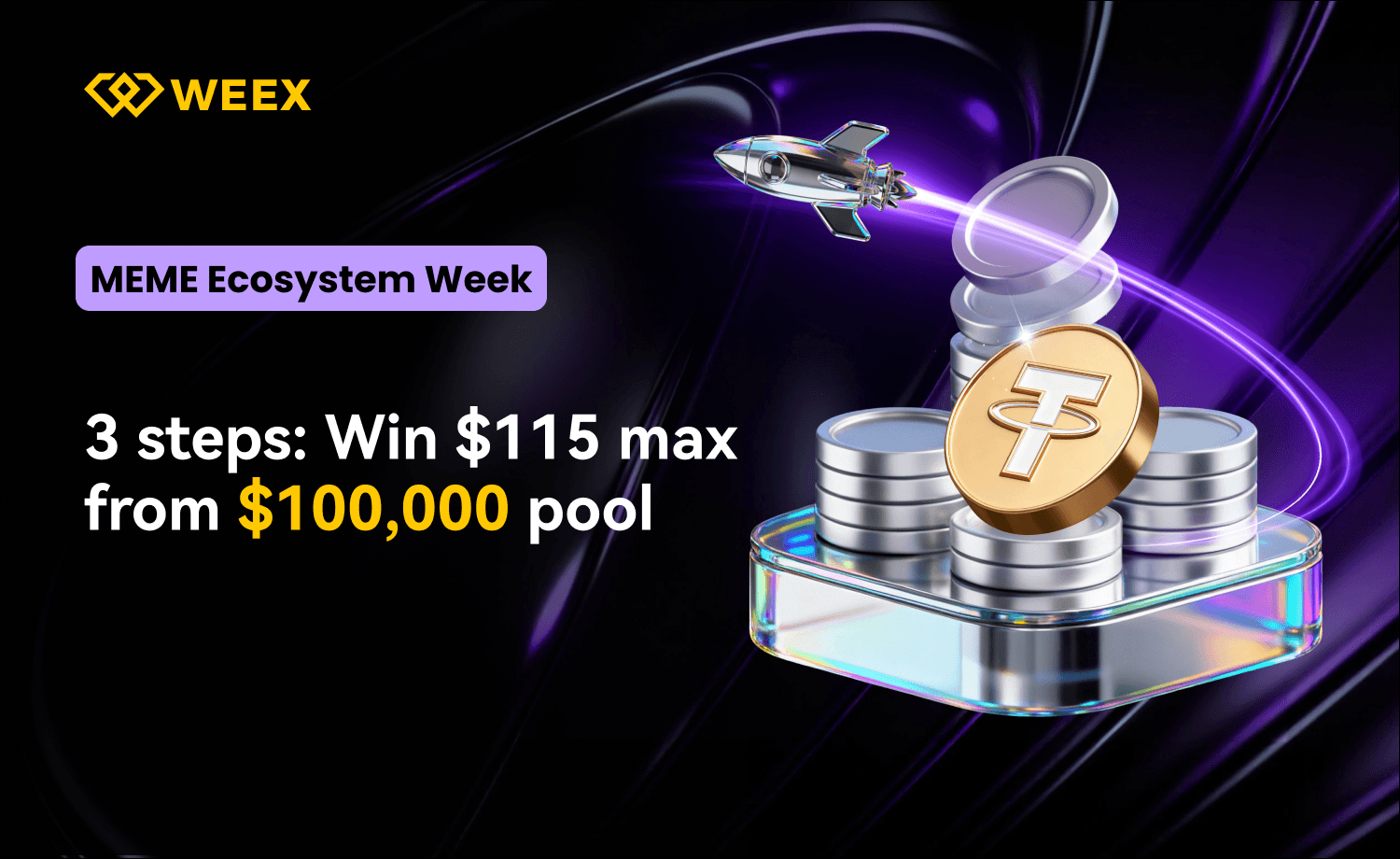
The cryptocurrency market has witnessed a significant shift in asset valuation paradigms over the last few years, particularly within the meme coin sector. Data from platforms like CoinMarketCap indicates that meme tokens often drive substantial trading volume during market rallies, serving as a high-beta proxy for broader blockchain adoption. For astute investors, volatility is not a deterrent but a mechanism for profit generation. In this context, the WEEX exchange has launched a targeted initiative designed to reward traders who are ready to capitalize on these movements. The current MEME Ecosystem Week offers a structured opportunity for new market participants to secure up to 115 USDT in bonuses while engaging with high-velocity assets like SHIB, WIF, and PEPE.
Understanding the MEME Ecosystem and Token Dynamics
Before diving into the mechanics of the event, it is crucial to understand the asset class driving this campaign. The "Meme Ecosystem" refers to a category of cryptocurrencies that derive their value primarily from community consensus, internet culture, and viral marketing, rather than traditional utility or cash flow models. Historically dismissed by institutional investors, tokens such as Shiba Inu (SHIB), Pepe (PEPE), and Dogwifhat (WIF) have matured into multi-billion dollar assets. Recent analysis from CoinGecko highlights that during specific liquidity cycles, meme coins frequently outperform major altcoins in percentage gains.
The tokens featured in this WEEX event—including FLOKI, FISH, YEE, RUSSELL, and the newly highlighted RNGR—represent various niches within this sector. RNGR (Ranger), for instance, is gaining traction as traders look for the next rotation in liquidity. Understanding the support and resistance levels of these tokens is vital. For a beginner, participating in the MEME Ecosystem Week is not just about claiming a bonus; it is a practical exercise in navigating high-volatility markets with the safety net of exchange incentives.
Event Overview: Timeline and Eligibility
The MEME Ecosystem Week is specifically tailored for new users entering the WEEX platform. The campaign is currently active, running from January 7, 2026, to January 17, 2026 (UTC+8). Since today is January 12, 2026, prospective participants have a limited window of approximately five days to register and complete the requisite tasks. This event is strictly for new registrations during this period; institutional users and market makers are excluded to ensure the rewards pool directly benefits individual retail traders.
To maintain fairness and preventing manipulation, WEEX has implemented strict verification protocols. The platform defines a new user as someone who signs up within the event duration. It is important to note that any attempt at bulk registration or wash trading will result in immediate disqualification. The structure of the event allows users to earn rewards cumulatively, meaning you can maximize your returns by completing all three designated events in sequence.
Step-by-Step Guide to Maximizing Rewards
The reward structure is divided into three distinct stages, allowing users to scale their participation based on their comfort level with capital allocation.
Event 1: Securing the Deposit Reward
The first step involves capital injection. Participants are required to make a net deposit of at least 100 USDT or an equivalent amount in eligible tokens such as SHIB, WIF, FLOKI, FISH, PEPE, YEE, or RUSSELL. The concept of "net deposit" is critical here; it is calculated as your total deposits minus your total withdrawals during the event period. Internal transfers do not count toward this metric. Successful completion of this step grants a reward of 8 USDT. This initial capital serves as the foundation for subsequent trading activities.
Event 2: Executing the First Spot Trade
Once the deposit is confirmed, the next phase focuses on spot trading execution. Users must complete a first spot trade with a volume of at least 100 USDT in any of the eligible event tokens mentioned previously. Spot trading volume is calculated by adding the buy volume and the sell volume. Completing this task yields a reward of 7 USDT. Unlike complex derivative strategies, spot trading is the most direct way to gain exposure to the underlying asset. For beginners, this is an excellent opportunity to practice order execution—limit orders or market orders—while knowing that a portion of the transaction cost is effectively subsidized by the reward.
Event 3: Daily Futures Trading Check-in
The most lucrative component of the campaign is the daily trading check-in. This stage requires a higher level of engagement and risk management. Participants must trade at least 1,000 USDT in futures volume on any pair daily. It is important to distinguish that futures volume includes both opening and closing positions. Meeting this daily threshold unlocks a Mystery Box containing a futures bonus ranging from 5 to 10 USDT. By checking in consistently every day throughout the event, a user can accumulate up to 100 USDT in futures bonuses. This rewards consistency and active market participation rather than passive holding.
Strategic Advice for New Crypto Traders
Entering the market through an incentivized event like the MEME Ecosystem Week requires a strategic mindset. A common mistake beginners make is over-leveraging their futures positions to meet volume requirements. To achieve the 1,000 USDT futures volume safely, consider using lower leverage with a higher margin, or executing multiple smaller trades rather than a single large, high-risk trade.
Furthermore, regarding the spot trading requirement, liquidity is key. Tokens like SHIB and PEPE generally have deeper order books compared to newer tokens like RUSSELL or RNGR. Trading pairs with higher liquidity results in lower slippage, ensuring that your trade execution price is closer to the market mark. Always keep in mind that the calculation excludes zero-fee trades and stablecoin pairs like USDC/USDT, so ensure your volume is generated on valid USDT-margined pairs.
Reward Distribution and Terms
Transparency in reward distribution is a hallmark of a reliable exchange. WEEX stipulates that rewards will be distributed within seven working days after the event concludes on January 17, 2026. The rewards for the deposit and daily check-in tasks are issued in USDT tokens, while the additional reward for the spot trade event is a futures bonus. This distinction is important for your post-event strategy; USDT can be withdrawn or traded, while futures bonuses are typically used to cover trading fees or as margin for contract trading. Users should also be aware that they can only claim one reward from the new user event series if multiple events overlap, based on the earliest distribution date.
Conclusion
The current market environment offers a unique convergence of volatility and opportunity. The MEME Ecosystem Week on WEEX provides a structured, incentivized pathway for new traders to engage with this dynamic sector. By adhering to the rules—maintaining net deposits, executing precise spot trades, and managing futures volume consistently—users can effectively reduce their cost of entry and maximize their potential upside. As we move further into 2026, understanding how to leverage exchange incentives while managing risk will continue to be a defining trait of the successful crypto investor.
DISCLAIMER: WEEX and affiliates provide digital asset exchange services, including derivatives and margin trading, only where legal and for eligible users. All content is general information, not financial advice-seek independent advice before trading. Cryptocurrency trading is high risk and may result in total loss. By using WEEX services you accept all related risks and terms. Never invest more than you can afford to lose. See our Terms of Use and Risk Disclosure for details.
You may also like

HMSTR Token Price: What Moves Hamster Kombat Now
Track HMSTR token price, supply, catalysts, and risks. Learn what drives Hamster Kombat price action and what traders should watch.

SpaceX IPO Stock Market Impact: What Investors Should Watch
SpaceX’s IPO could reshape indexes, liquidity, space stocks, and crypto risk appetite. Here is what matters before the listing.
CBRS Stock: What to Know About Cerebras After Its IPO
CBRS stock surged after Cerebras priced its IPO at $185. Learn what the AI chipmaker does, why valuation matters, and what risks to watch.
Cerebras Stock: What to Know After the CBRS IPO
Cerebras stock now trades on Nasdaq as CBRS after a $185 IPO. Learn the IPO facts, valuation context, AI-chip story, and key risks.

COAR Coin: What Chinese Oil Asset Reserve Really Is
COAR coin is a new Solana oil-narrative token. Learn what Chinese Oil Asset Reserve claims, how to verify the contract, and key trading risks.
Public Asset Control: What PAC Token Really Is
Public Asset Control PAC is a Solana token with bold asset-control branding. Learn what it is, what is verified, and the key trading risks.

Will PAC Coin Reach $1? PAC Crypto Price Analysis
Will PAC coin reach 1? Current price is 0.000467, 1B supply, 467K marketcap. Here is what 467K marketcap would actually require.
Claude AI helps uncover forgotten Bitcoin fortune worth $400K hidden for 11 years
Claude AI helped recover a Bitcoin wallet lost for 9 years. 5 BTC, $400K. Did AI crack encryption? No. Here is what actually happened.

What Is COAR Crypto? Chinese Oil Asset Reserve (COAR) Coin Explained
What is COAR crypto? Chinese Oil Asset Reserve on Solana. market cap, oil-themed meme token. No real reserves. Learn risks & data inside.

Introducing Superform ($UP): User-Owned Onchain Neobank and Price Prediction
Superform is a user-owned onchain neobank gaining attention from v2 growth, SuperVaults, $UP utility, and WEEX trading.

What Is SAOS Crypto? Can SAOS Hit $0.1?
Is SAOS crypto a hidden gem? Strategic American Oil Supply on Solana explained. No hype, just data: $75K cap, locked LP, RWA narrative.
World Collective Oil Reserve (WCOR) Crypto Price Prediction 2026: Is WCOR a Good Investment
World Collective Oil Reserve (WCOR) crypto price prediction for 2026. We analyze the Solana registry token, on-chain risks, and whether WCOR can break 0.015.

$SUPERFORM Airdrop on WEEX: Complete Guide to SUPERFORM and Claim Free $SUPERFORM
Learn Superform tokenomics, its user-owned neobank ecosystem, and how to claim rewards in the WEEX 50,000 USDT SUPERFORM airdrop before May 21, 2026.

What Is WEEX Token (WXT)? A Complete Guide
WEEX Token (WXT) is the native utility token within the WEEX ecosystem. Its main purpose is to improve the trading experience rather than serve purely as a speculative asset.
In simple terms, WXT is mainly used for fee discounts (the more you hold, the lower your trading fees), staking rewards, and participation in platform events and governance voting. It also allows users to engage more deeply in the WEEX ecosystem, including promotional campaigns and future Web3 integrations.
In terms of acquisition, users can typically buy WXT directly on the WEEX exchange using assets like USDT, or earn it through platform events. For storage, it can be kept in an exchange wallet for convenience or transferred to external wallets (such as cold wallets) for enhanced security.
From a tokenomics and market perspective, WXT’s value is closely tied to WEEX’s user growth, trading volume, and overall crypto market conditions, making it relatively volatile and high-risk. Analysts generally view it as more suitable for users interested in the long-term development of the platform rather than short-term speculation.
Overall, WXT is a “trading utility token” that enhances user experience through fee discounts, staking benefits, and eco

What is World Cup Doge (WCDOGE) Coin? Is WCDOGE a Good Investment?
What is WCDOGE crypto? Meme token or football fan play? Real data, honest risks, and how to buy World Cup Doge.
SIM Owner Details: Legal PTA Check and Safety Guide
Learn what SIM owner details means, how to check SIMs on your CNIC through official PTA channels, and how to avoid lookup scams.
NBIS Stock: What Nebius’ AI Cloud Surge Means Now
NBIS stock jumped as Nebius reported rapid AI cloud growth. See the key Q1 2026 numbers, catalysts, valuation risks, and what to watch next.

WXT Bounty Hunter Program Explained: Earn Crypto Rewards While Learning to Trade on WEEX
The WXT Bounty Hunter Program is a WEEX campaign running from May 8 to May 18, 2026, designed to help beginners learn crypto trading while earning rewards.
Users complete simple tasks like depositing USDT, trading WXT, and holding tokens to receive WXT rewards. New users can earn bonuses such as 200 WXT, while advanced users can compete for larger rewards based on trading activity, including a 100,000 WXT prize pool.
The program uses net metrics (deposits and buys minus withdrawals) to ensure fairness and excludes institutional trading. Holding 300 WXT also unlocks extra benefits like enhanced airdrops.
Overall, it combines learning and earning, making it an entry point into crypto trading on WEEX.
HMSTR Token Price: What Moves Hamster Kombat Now
Track HMSTR token price, supply, catalysts, and risks. Learn what drives Hamster Kombat price action and what traders should watch.
SpaceX IPO Stock Market Impact: What Investors Should Watch
SpaceX’s IPO could reshape indexes, liquidity, space stocks, and crypto risk appetite. Here is what matters before the listing.
CBRS Stock: What to Know About Cerebras After Its IPO
CBRS stock surged after Cerebras priced its IPO at $185. Learn what the AI chipmaker does, why valuation matters, and what risks to watch.
Cerebras Stock: What to Know After the CBRS IPO
Cerebras stock now trades on Nasdaq as CBRS after a $185 IPO. Learn the IPO facts, valuation context, AI-chip story, and key risks.
COAR Coin: What Chinese Oil Asset Reserve Really Is
COAR coin is a new Solana oil-narrative token. Learn what Chinese Oil Asset Reserve claims, how to verify the contract, and key trading risks.
Public Asset Control: What PAC Token Really Is
Public Asset Control PAC is a Solana token with bold asset-control branding. Learn what it is, what is verified, and the key trading risks.


